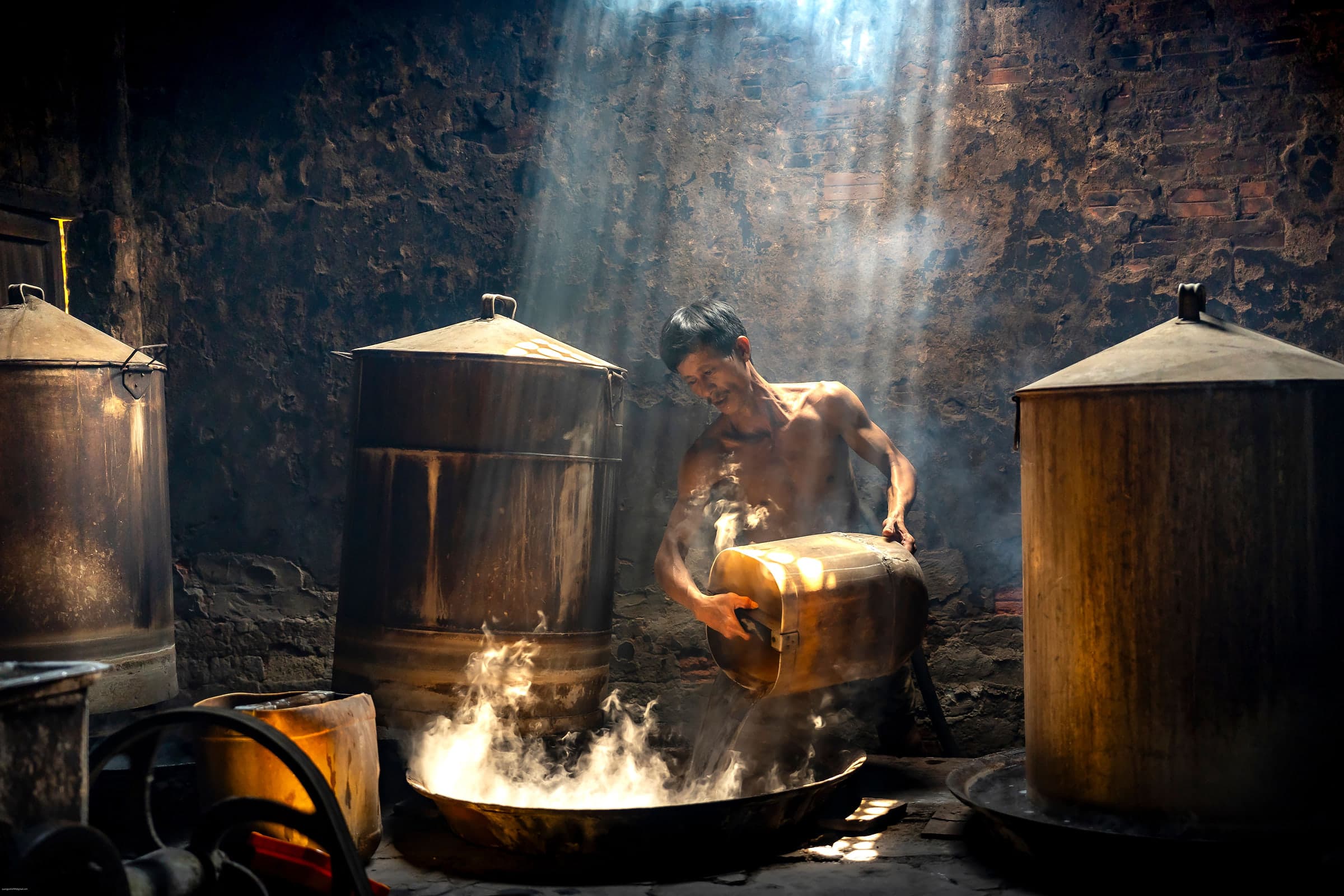
Meet the world's best-selling spirit
Baijiu (bye-j'yo) — "white liquor" — is China's national spirit: a category as old as Chinese civilization itself, and as varied as whisky, rum and tequila combined.
What is baijiu?
Baijiu is a distilled spirit made from grain — most commonly sorghum, often blended with wheat, rice, corn or millet. It has been distilled in China for at least a thousand years, and its production traditions stretch back four millennia.
Alcohol content ranges from roughly 40% to 60% by volume. The defining feature of baijiu is not its strength, but its aroma — a dense, layered fragrance produced by a fermentation method unlike any other spirit in the world.
Pronunciation: bye-j'yo. In Mandarin it means "white liquor" — clear, honest, and unaged in wood.
A living tradition
- The oldest continuously operating distilleries on earth are Chinese baijiu cellars — some have been in continuous use for more than 450 years, within a tradition of distillation stretching back over two thousand years.
- Baijiu is served at every major Chinese occasion: weddings, banquets, business deals, festivals.
- It outsells whisky, vodka, gin and rum combined — yet remains undiscovered beyond China.
- Today a new generation of distillers and exporters is carrying it across borders.
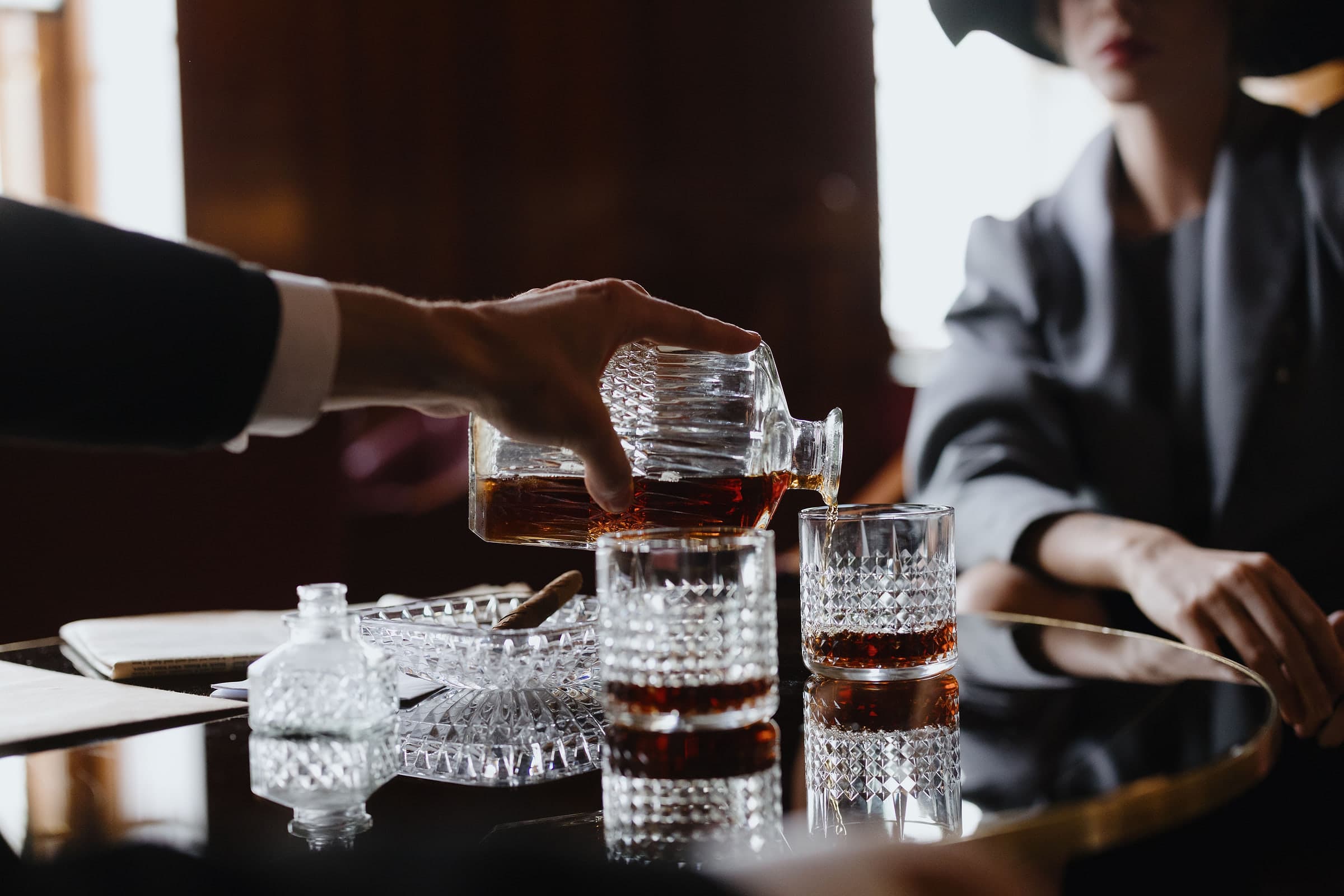
Poured, paired and prescribed — baijiu has been part of Chinese life for a thousand years.
Solid-state distillation
Baijiu's single greatest difference from every famous Western spirit.
Western spirits · liquid-state
Whisky, rum, vodka and brandy dissolve sugars in water and ferment that liquid, then distill it — usually in efficient column stills.
Result: a cleaner, more controlled profile, with far fewer aroma compounds per liter of spirit.
Three aroma families
Chinese drinkers classify baijiu by aroma, the way wine lovers talk about terroir. These three families cover the classics.
Sauce Aroma
Savory, soy-like, deeply layered. The style of Moutai and Guizhou — the 'caviar' of baijiu.
Strong Aroma
Bold, fruity and floral — the most popular family, home to Wuliangye, Luzhou Laojiao and Guoyuan.
Light Aroma
Clean, crisp and elegant — the style of Fenjiu in Shanxi, a great entry point for new drinkers.
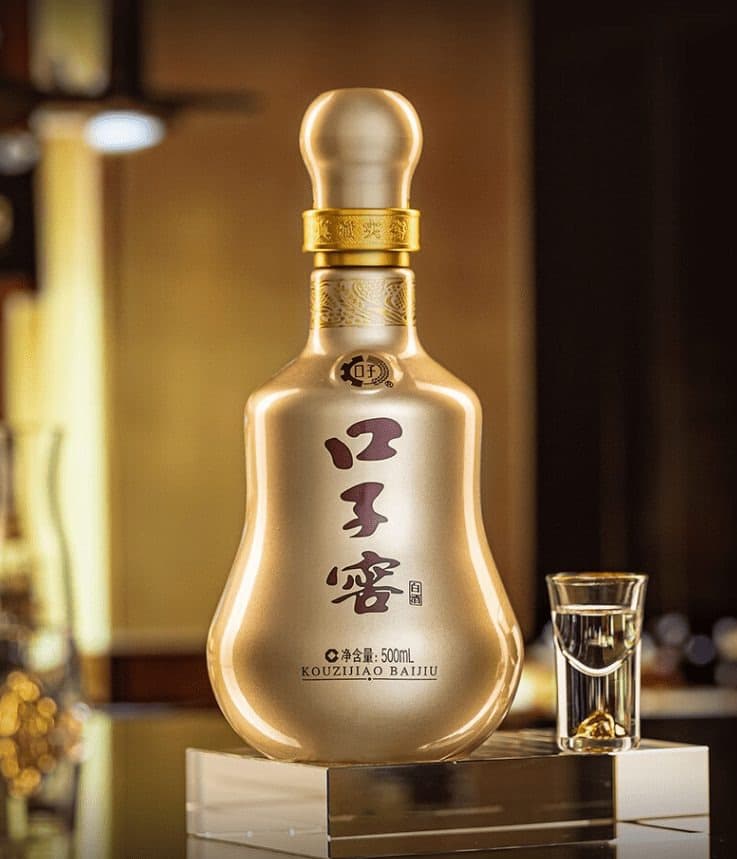
Beyond the three classics lies the blended aroma (Jianxiang) of Kouzijiao — a house style that weaves sauce and strong aromas into one harmonious bottle.
Where baijiu is born
Every bottle we export comes from two of China's most respected brewing regions — Anhui's blended-aroma masters and Jiangsu's strong-aroma tradition.
The inventors of blended aroma
Distilling in Huaibei, Anhui since the Tang dynasty, Kouzijiao pioneered Jianxiang — the blended aroma that marries the savory depth of sauce-aroma baijiu with the bright lift of strong-aroma. Their cellars are among the most storied in China, with fermentation pits continuously active for generations.
- Tang-dynasty brewing heritage
- Signature blended aroma
- Aged 5 to 20 years in clay
- Sorghum, wheat, barley & peas
Jiangsu's strong-aroma elegance
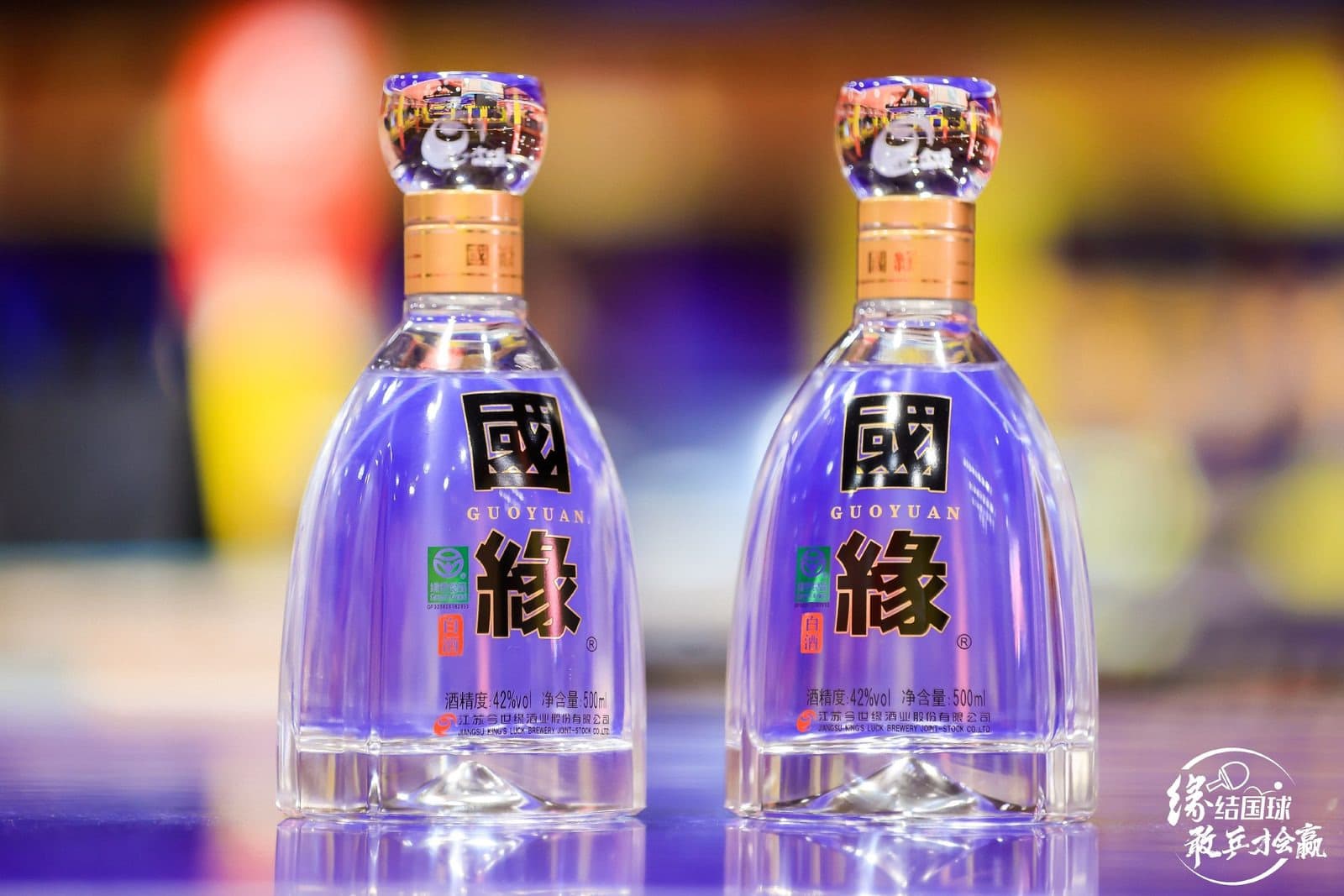
Guoyuan is the premium line of Jinshiyuan, from the legendary brewing town of Gaogou in Huai'an, Jiangsu. Its strong-aroma spirits are known for floral, honeyed character — from a gentle 42% entry point to a bold 52% flagship, all matured in traditional cellars.
- Legendary Gaogou brewing town
- Classic strong aroma
- Traditional cellar maturation
- Five-grain recipe
From grain to glass
The solid-state process that defines baijiu — in four steps.
Qu — the living starter
Grain is steamed and inoculated with qu, a living culture of mold, yeast and bacteria unique to baijiu.
Solid-state fermentation
The grain ferments as a solid mass in mud pits or clay jars — sometimes for months — building hundreds of aroma compounds.
Distillation
The fermented grain is distilled in traditional stills, capturing the spirit's dense, layered character.
Clay-vat aging
New spirits rest in earthenware vats for years — softening, breathing, and developing depth no wooden barrel can match.
How to drink it
- Pour a small glass — traditionally a tiny cup, about 25ml. Baijiu is sipped, not slammed.
- Swirl gently and breathe: the aroma is the main event. Take your time with it.
- Sip at room temperature or slightly chilled. Let a little air open it up.
- Pair with food — baijiu is made for the table, from Sichuan spice to Cantonese roast.
- Try it in a cocktail: it brings savoury depth no other spirit offers.
First sip? Go easy, go curious
The first sip of baijiu surprises most Western drinkers — it has nothing to hide behind. Give it three sips. The first is curiosity, the second is understanding, and the third is usually the moment people start asking questions.